Buyer's guide · Communications

Best wind-up and emergency radios for UK homes

When the power goes, broadband and cordless phones go with it and mobile networks get congested. A radio is the cheapest way to keep hearing local updates — here are the three we'd keep at home.

UK guidance · Last reviewed September 2026

Independently selected for UK households. We may earn a commission if you buy through our links — it never changes what we recommend.

Autumn & winter 2026 update

Named storm season is when local radio matters most: power restoration times, flood warnings and road closures are broadcast long before most people can get online. Wind or charge your radio fully now, check it picks up your local BBC station, and keep it with your torch where you can find it in the dark.

Our pick

Midland ER40 Emergency Crank & Solar Radio

The sensible household default. Crank, solar and battery power mean it works on day three of an outage, and the built-in torch earns its place in the kitchen drawer.

Side by side

Every option below is one we'd genuinely put in a UK household kit — the difference is budget and how long you need it to last.

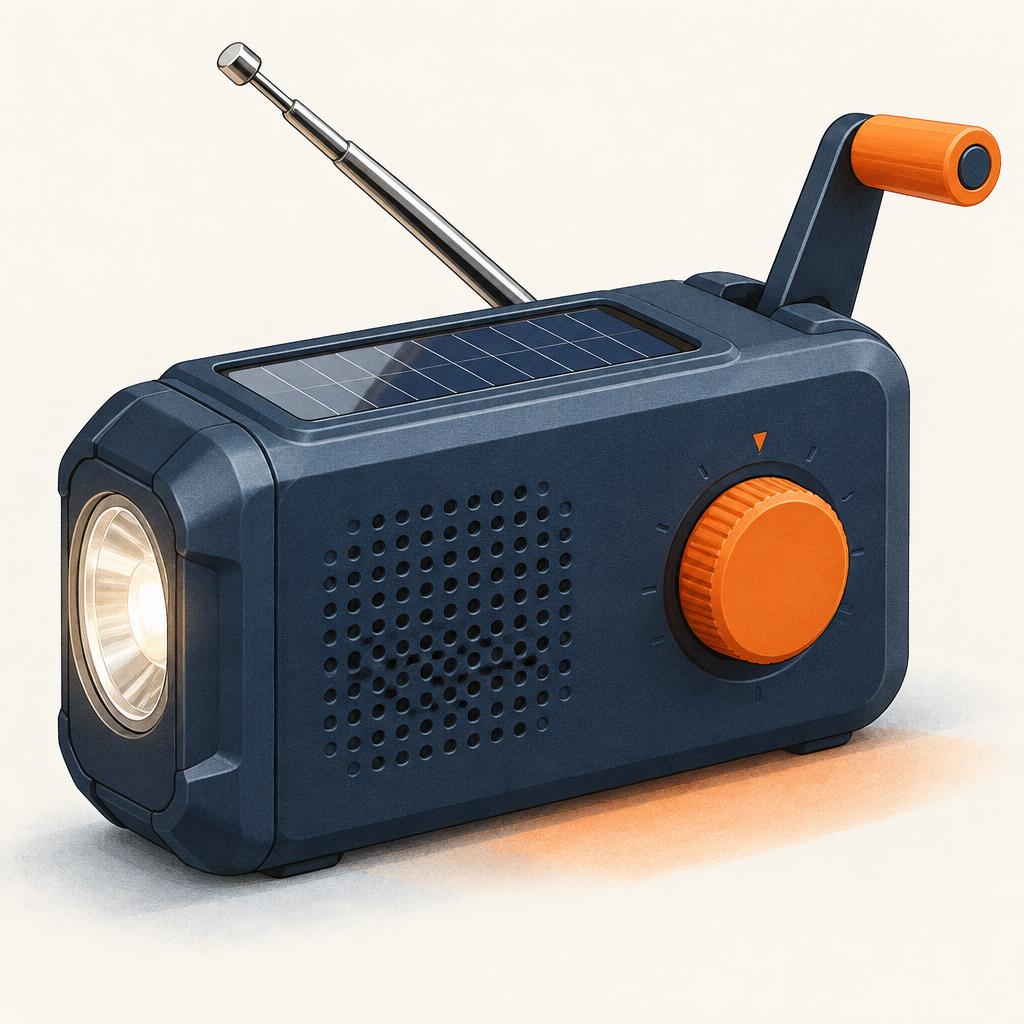
Original illustration of a Midland ER40 Emergency Crank & Solar Radio
PlusBest overall

Midland ER40 Emergency Crank & Solar Radio

The sensible household default. Crank, solar and battery power mean it works on day three of an outage, and the built-in torch earns its place in the kitchen drawer.

  • Hand crank and solar charging
  • AM/FM reception
  • Built-in torch
  • Works without mobile data
  • Larger item for storage
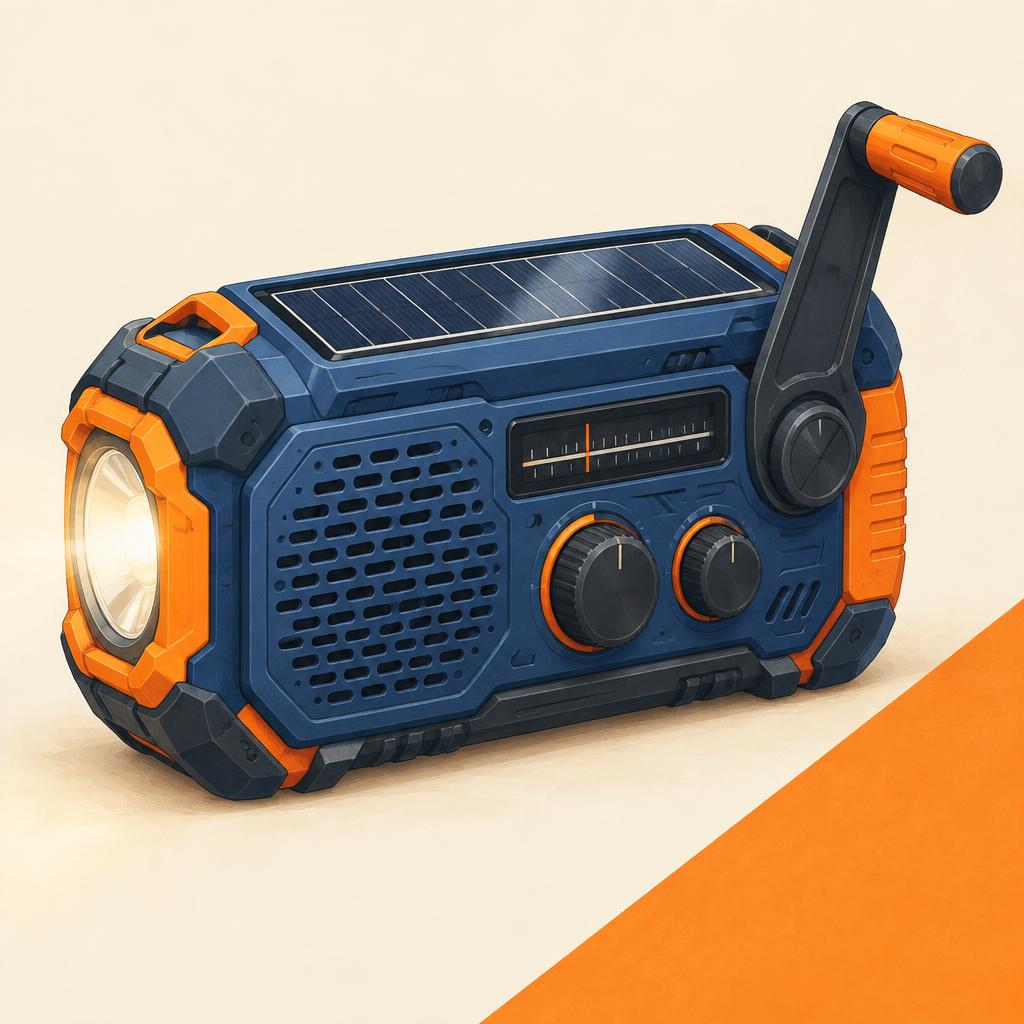
Original illustration of a Midland ER300 Emergency Radio
ProBest heavy-duty pick

Midland ER300 Emergency Radio

For rural homes and households that see repeated storm outages. Three power sources, a proper battery reserve that can top up a phone, and an SOS beacon.

  • Solar, crank and battery power
  • 2,600mAh reserve charges a phone
  • Torch and SOS beacon
  • Built for long outages
  • Premium price for a radio

Not sure how much you actually need? Score your household in three minutes and see exactly which gaps to close first.

Want the whole kit in one place? The Communications Pack bundles these picks with the checklist items most households still miss.

View the Communications Pack

How to choose

Pick a power source that can't go flat in storage

The radio that fails is the one with dead batteries in a drawer. A wind-up or solar set removes that risk; a battery-only radio is fine if you keep spare batteries next to it and test it twice a year.

FM and AM before DAB

For emergency use, FM and AM are more forgiving and use less power. If you prefer DAB day to day, make sure your emergency set still has FM.

Phone charging is a bonus, not the plan

Cranking a radio to charge a phone takes a long time for a little charge. Keep a power bank for phones and let the radio do the job it's best at: keeping you informed.

Label it with your local station

Write your local BBC station's frequency on a sticker on the radio. In a real outage, nobody remembers it and nobody can look it up.

Reading guides is the easy half. Check your household score first — three minutes, no signup, and it shows you which of these gaps actually apply to you.

Common questions

Why do I need a radio if I have a smartphone?

In a widespread power cut, mobile masts run on limited backup batteries and the network gets congested fast. Broadband and cordless landlines stop with the electricity. Local BBC and commercial radio keep broadcasting travel, flood and power updates, and a radio uses a fraction of the energy a phone does.

Is a wind-up radio worth it?

Yes, as a backstop. A wind-up or solar radio can't run out of batteries in a drawer, which is the most common way emergency kit fails. Cranking is slow for charging a phone, so treat that feature as a bonus and keep a power bank for phones.

Should I get a DAB or FM radio for emergencies?

FM and AM are the safer bet for emergencies: they are simpler, use less power and degrade gracefully at the edge of reception. DAB is fine where coverage is good, but uses more battery and cuts out completely when the signal weakens.

Which station should I tune to in a UK emergency?

Your local BBC radio station carries the most detailed local updates on power, flooding and road closures. Write its FM frequency on a label stuck to the radio, because you won't be able to look it up online when the internet is down.

How do I keep an emergency radio ready?

Test it at the March and October clock changes along with your torches. Wind or charge it fully, check it picks up your local station, and store any batteries alongside it rather than inside, where they can leak.

Go deeper

Free download

Get the free 72-Hour Household Checklist

One page, made for the fridge door: what your house needs for three days without power or water. We'll email it straight over, plus a short monthly newsletter. No spam, no scaremongering.

  • Water, power, food and first aid
  • Space to note where things are kept
  • Prints fine in black and white