Buyer's guide · Water

Best emergency water storage and filters for UK homes

Three litres per person per day, for three days. Here's how to actually hold that much water in a British house — and what to use when the supply itself is the problem.

UK guidance · Last reviewed September 2026

Independently selected for UK households. We may earn a commission if you buy through our links — it never changes what we recommend.

Our pick

Starnearby 20L Water Container with Tap

The straightforward way to hold a household's 72 hours. Stackable, taps cleanly, and stores in a cupboard or garage without dominating the space.

Side by side

Every option below is one we'd genuinely put in a UK household kit — the difference is budget and how long you need it to last.

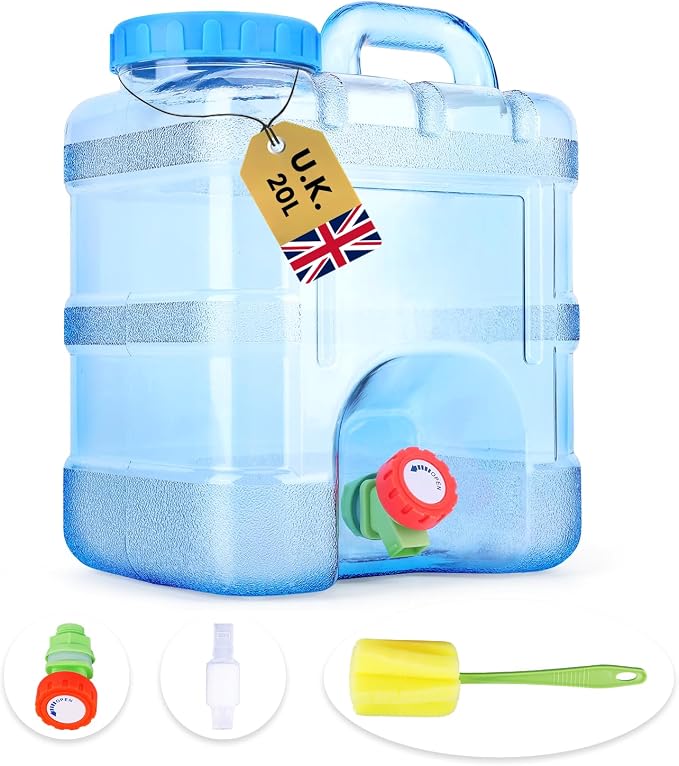
Starnearby 20L Water Container with Tap
PlusBest for home storage

Starnearby 20L Water Container with Tap

The straightforward way to hold a household's 72 hours. Stackable, taps cleanly, and stores in a cupboard or garage without dominating the space.

  • 20 litres — roughly two people for 3 days
  • Food-grade and sealed
  • Stacks for larger households
  • Tap makes rationing easy
  • Heavy once filled
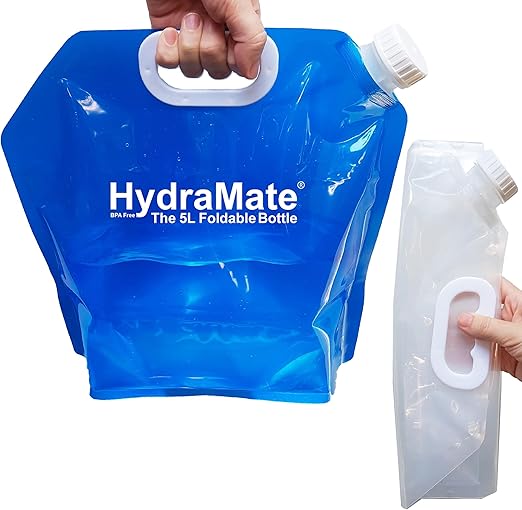
HydraMate Collapsible Water Carrier, 2 x 5L
LiteBest on a budget

HydraMate Collapsible Water Carrier, 2 x 5L

Collapses flat until you need it, which is why it actually gets kept. Ideal for refilling from a standpipe or a neighbour's supply during a mains outage.

  • Folds flat for storage
  • Refillable from a standpipe
  • Light enough to carry when full
  • Cheapest way to hold real volume
  • Requires filling before use
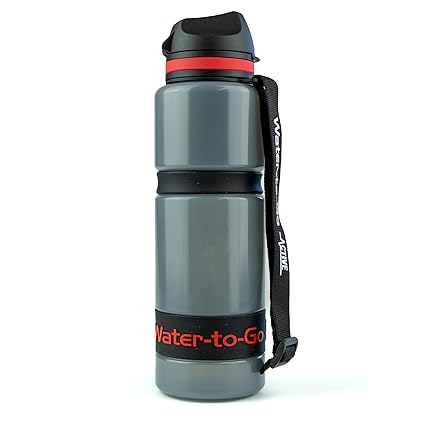
Water-to-Go Filter Water Bottle
ProBest filter bottle

Water-to-Go Filter Water Bottle

Covers the scenario stored water doesn't: a boil-water notice or contaminated supply. One bottle per person turns any tap into drinking water.

  • Filters as you drink
  • No power or heat needed
  • Grab-bag sized
  • Replaceable filter cartridge
  • Higher purchase cost
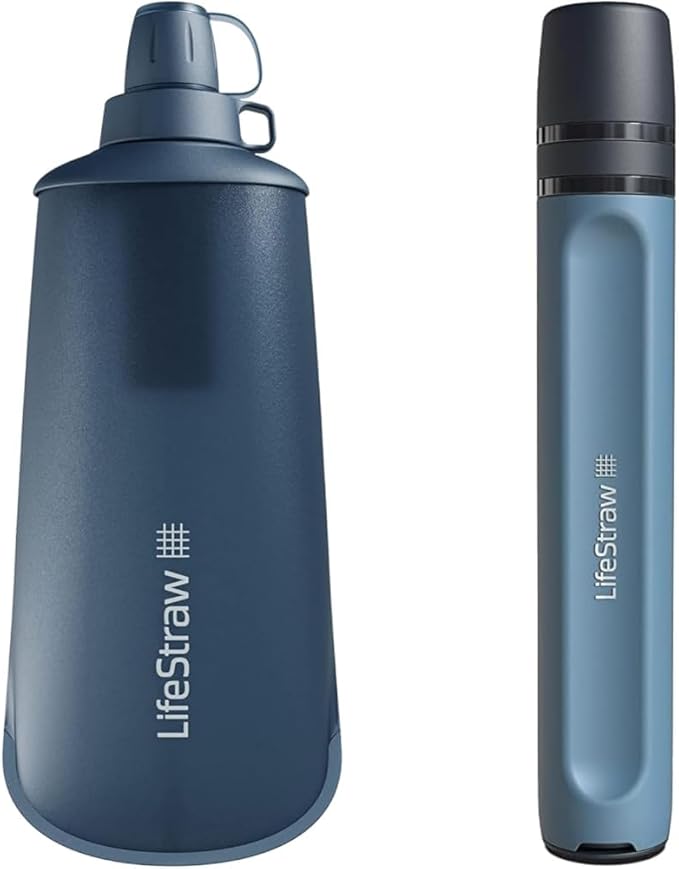
LifeStraw Peak Series Filter Bottle
ProBest for long-term resilience

LifeStraw Peak Series Filter Bottle

A tougher, longer-lasting filter for households that want one bottle to outlive several emergencies — and for flood scenarios where supply may be out for days.

  • High filter lifespan
  • Rugged enough for a grab bag
  • Handles poor-quality sources
  • Trusted, widely tested brand
  • Squeeze action takes effort

Not sure how much you actually need? Get a readiness score in three minutes.

Work out my kit

How to choose

Store first, filter second

Stored water is instant and needs no thought when you're stressed. Filters are your insurance for contamination and for outages that outlast your stored litres. Get 36 litres in the house before you spend anything on filtration.

Split your storage

Don't put all your water in one container. Two 20-litre cubes in different places survive a leak, a flood or a blocked room; one 40-litre drum does not — and it's too heavy to move once full.

Plan for flood, not just outage

In a flood the mains may still run but be unsafe. That's a filtration problem, not a storage one, and it's the reason a filter bottle per person belongs in the grab bag by the door.

Rotate on a schedule you'll keep

Twice a year, tied to something you already do — the clocks changing works well. Water that has sat for three years is the most common failure in an otherwise good kit.

Common questions

How much water should I store per person?

Plan for 3 litres per person per day for drinking and basic hygiene — about 9 litres per person over a 72-hour window. A family of four therefore needs roughly 36 litres, plus a little extra for pets.

How long does stored tap water stay drinkable?

Tap water kept in clean, sealed, food-grade containers away from sunlight is fine for around six months. Rotate it twice a year — pour it on the garden and refill on the same weekend you change your clocks so you never have to remember a date.

Do I need a filter bottle if I have stored water?

They solve different problems. Stored water covers a short mains outage; a filter bottle covers contamination — a burst main, a boil-water notice or flood water in the supply — and keeps working long after your stored litres run out. Most households want both.

What containers are safe to store water in?

Food-grade containers designed for water: collapsible carriers, water cubes or purpose-made jerrycans. Do not reuse milk bottles (protein residue breeds bacteria) or containers that previously held chemicals. Sunlight encourages algae, so store them in a cupboard or garage.

Is boiling still the best treatment?

For biological contamination, yes — a rolling boil for one minute is the most reliable household treatment. It does not remove chemical contamination, and it needs a heat source you may not have in a power cut, which is why a filter bottle is the practical backup.

Go deeper

Free newsletter

Stay Prepared

Join UK households getting practical readiness advice. No spam, no scaremongering.

  • Preparedness guides
  • Emergency checklists
  • Readiness updates