The number to plan for
Plan on three litres per person per day. Roughly two litres is drinking water and one litre covers cooking, teeth and basic washing. For three days that's nine litres per person — 36 litres for a family of four, or about six large supermarket bottles per person.
Adjust for your household
Increase it for pets (around 50ml per kilo of bodyweight per day for a dog), anyone pregnant or breastfeeding, and hot weather. If you rely on a private supply or a borehole with an electric pump, store more — no power means no water at the tap.
How to store it
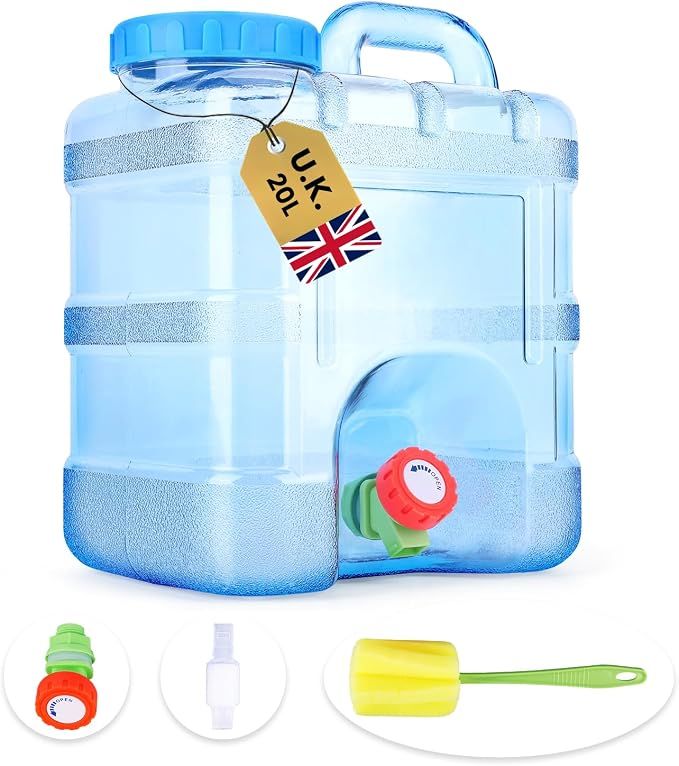
Commercially bottled water is simplest: keep it sealed, out of direct sunlight, off bare concrete and away from petrol, paint or cleaning products, because plastic absorbs vapours. Rotate roughly every six months. If you fill your own food-grade containers, sterilise them first and label the fill date.
Where you'll actually put it
36 litres is about the volume of a suitcase. Under a bed, at the back of a cupboard, or in a garage in frost-free conditions all work — spread it across two locations so a flooded room doesn't take out the whole supply.
If the mains goes off
Your water company must provide alternative supply during a prolonged interruption, usually as bottled water or a street bowser — take a carrier, as bowsers don't hand out bottles. Fill the bath and any clean containers as soon as you hear of a problem; that water is fine for flushing even if you'd rather not drink it.
Making questionable water safe
Boiling for one minute at a rolling boil remains the most reliable household treatment and kills the pathogens that matter. A filter bottle handles bacteria and protozoa on the move. Neither removes chemical contamination — if a 'do not drink' notice is issued, follow it and use bottled water.